
Check Valves: Types, Selection, Sizing & Installation Guide
Contents (drop-down TOC)
- Check valve basics (one-way flow, backflow)
- Where check valves are used (water, pumps, steam, gas, vacuum)
- Types of check valves you’ll run into
- How to choose a check valve (selection checklist)
- Check valve sizing basics (Cv/Kv, flow rate, pressure drop)
- Installation best practices (orientation, placement, commissioning)
- Troubleshooting & maintenance (leakage, chatter, sticking, wear)
- Standards, documentation & buying tips (Norway/Europe)
A check valve (also called a non-return valve or NRV) allows flow in one direction and helps prevent backflow. That sounds simple, but real systems aren’t always gentle. Flow can be low, pulsing, dirty, or fast-changing—especially around pumps. The best check valve is the one that stays stable in your actual operating conditions.
If you’re selecting for a project: don’t start with “which brand.” Start with media, pressure/temperature, normal flow (not only max flow), and installation orientation. Those four inputs narrow the field quickly.
Check valve basics: one-way flow and backflow control
Before you compare designs, it helps to pin down what “one-way” means in practice. A check valve opens when upstream pressure exceeds downstream pressure by enough to move the closure element (disc, ball, piston, or diaphragm). It closes when that differential disappears or reverses.
How it works in real piping
Forward flow vs backflow
In forward flow, the valve’s internal element lifts or swings away from the seat so fluid can pass. If flow slows rapidly or reverses, the element returns to the seat and blocks reverse movement. That closure protects equipment, prevents contamination, and can reduce unwanted draining of lines.
What “cracking pressure” really is
Many check valves need a minimum differential pressure to start opening. That threshold is called cracking pressure. In a high-flow water main, cracking pressure may be a footnote. In a low-flow process line or a long pipe with small pressure margins, it can decide whether your system behaves—or quietly struggles all day.
Common terms you’ll see
“Check valve,” “non-return valve,” and “one-way valve” are often used interchangeably. In a hydraulic circuit you may see “one-way valve” more often, but the job is the same: stop reverse flow.
Where check valves are used: water, pumps, steam, gas, and vacuum
Once the basics are clear, the next question is where check valves earn their keep. The application shapes everything: the type, materials, sealing, and how sensitive the valve is to low flow or contamination.
Typical application buckets
Water systems
Check valves are common in water distribution, booster systems, irrigation, and treatment-related piping. In water, the usual headaches are corrosion, debris, and pressure surges (water hammer) from quick changes in velocity.
Pumps and pump discharge lines
On pump discharge, a check valve helps prevent reverse rotation and keeps the line from draining back. This is also where closing dynamics matter most: a valve that “slams” can trigger noise, vibration, and repeated seat wear.
Steam and condensate (high level)
Steam and condensate services often involve high temperatures, flashing, and erosion risks. The valve type and seat materials need to match the actual phase and the temperature—not just the word “steam” on a drawing.
Gas applications (high level)
Gas is less forgiving because it has less damping than liquid. That can make chatter more likely in marginal conditions. Leakage tolerance can also be tighter, depending on the process.
Vacuum and low differential pressure
In vacuum or very low differential pressure, many standard check valves won’t behave the way you expect. If the system can pull negative pressure, confirm the valve is rated and tested for that scenario. Small details like seat geometry become big.
Types of check valves you’ll run into
Now we can get practical. Check valves share a purpose, but they don’t share the same failure modes. If you know the design’s personality—how it closes, how it handles debris, and how it behaves at low flow—you can avoid most surprises.
Swing check valves
What they are
Swing checks use a hinged disc that swings open with forward flow and swings shut when flow reverses. They’re common in water and general infrastructure because the design is familiar and often cost-effective.
Where they fit best
If you have steady flow and enough space, swing checks can be a solid choice—especially in larger diameters where compact designs become harder to source.
Where they struggle
Rapid flow reversals can cause slam. If your system sees pump trips, quick valve closures downstream, or frequent starts/stops, you’ll want to think carefully about closing speed and placement.
Lift / piston check valves
What they are
Lift (or piston) check valves use a guided element that lifts off the seat under forward differential pressure. The guided motion can improve alignment, but it also means more surfaces can collect deposits.
Best-fit scenarios
If you need a more controlled closing element and your media is clean, lift/piston designs can work well in higher-pressure service.
Watch-outs
They’re often less tolerant of solids. If you have scale, particles, or sticky fluids, plan for filtration or choose a more forgiving design.
Ball check valves
What they are
Ball check valves seal using a ball that moves with flow direction. Many are compact and simple, which can be a benefit when you need straightforward maintenance.
Where they make sense
They’re often used where compactness matters and where a simple closure element is preferred. Depending on the seat design, they can also handle some contamination better than guided designs.
Common failure mode
Wear or debris on the seat can cause leakage. If the valve is buried in hard-to-reach piping, the real failure is often “nobody checks it until it’s too late.”
Diaphragm check valves
What they are
Diaphragm check valves rely on a flexible diaphragm to open and close. That flexibility can make sealing gentle and can help in certain chemical or dirty services.
Where they fit
If your application values sealing feel and you’re operating inside the diaphragm material’s limits, these valves can be a strong option.
Non-negotiable check
Confirm temperature and media compatibility for the diaphragm material. When a diaphragm fails, it usually fails decisively.
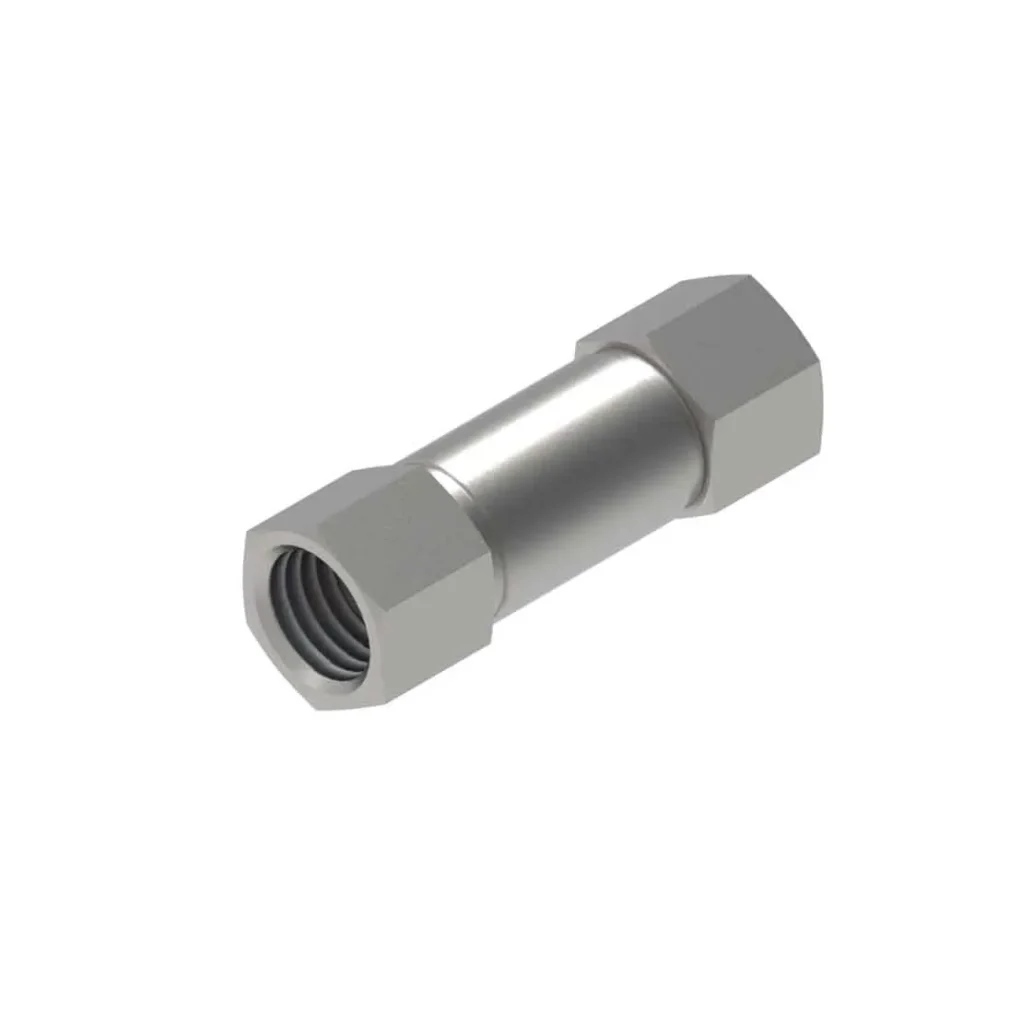
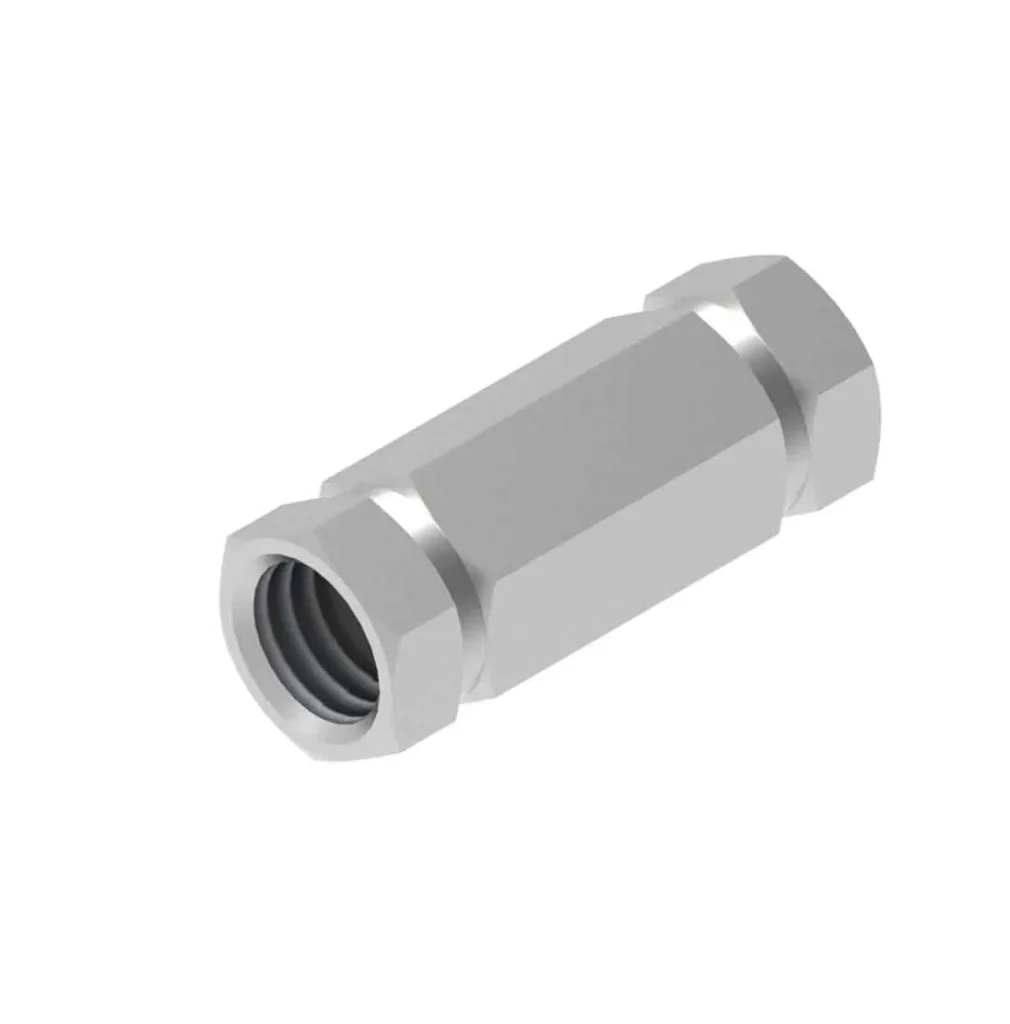
Spring / in-line check valves
What they are
Spring check valves use a spring to bias the element toward the seat. They are often compact and available as in-line designs that fit tight layouts.
Why engineers like them
Spring force can help the valve close faster, which may reduce slam in some systems. They can also be suitable in more orientations, depending on model.
Where selection goes wrong
Cracking pressure matters. If your system has low differential pressure at normal flow, a spring that’s too stiff can quietly restrict flow and waste energy.
Dual-plate / wafer check valves
What they are
Dual-plate check valves typically use two hinged plates and are often built in wafer form. The design is compact, which is valuable in crowded pipe racks or retrofits.
Benefits
Compact footprint, typically reasonable pressure drop for the space, and a common option in larger pipe sizes.
Don’t assume “compact” means “quiet”
Noise and chatter are system problems as much as valve problems. Placement, flow profile, and velocity still decide the outcome.
- If you expect dirty media, lean toward designs that tolerate debris and are easy to inspect.
- If you expect low flow, prioritize stable operation near the seat (cracking pressure + sizing).
- If you expect transients, think about closure dynamics and placement—especially near pumps.
- If space is tight, wafer/inline designs can solve mechanical problems, but still need correct sizing.
Pick the design that matches your operating reality, not the one that looks best on a datasheet.
How to choose a check valve: a selection checklist
With the common types in mind, the next step is selection. A good checklist keeps you from ordering a valve that “should work” on paper but behaves poorly at normal flow.
Media compatibility: water, oil, gas, steam, and particles
Water
In water, think about corrosion, debris, and transient events. If you’re in infrastructure, also consider maintenance access and how often the line will be cycled.
Oil and hydraulic fluids
In hydraulic or oil service, cleanliness and viscosity influence how the valve opens and closes. A valve that’s stable in water can behave differently in thicker fluids.
Gas
In gas service, closing stability can be more sensitive, and acceptable leakage may be lower depending on the process. Don’t treat “gas” as a minor variation of liquid.
Steam and condensate
Steam/condensate selection depends on what phase is actually at the valve at each operating point. Temperature and erosion risk move to the front of the line here.
Particles, slurry, or scale
If you have solids, ask where they will settle. A design with narrow guiding surfaces may stick. A design with a forgiving seat may last longer—but only if you can service it.
Operating conditions: pressure, temperature, and vacuum
Pressure (including surges)
Use max operating pressure, but also account for surges. In pump systems, the “normal” pressure may be calm, while transient pressure events do the real damage.
Temperature (steady and cycling)
Don’t only check the maximum temperature. If you have frequent cycling, materials expand and contract repeatedly, and that can affect sealing and wear.
Vacuum and back-siphon scenarios
If the system can pull vacuum or back-siphon, confirm the valve can seal and survive those conditions. It’s a common reason “standard” valves underperform.
Performance factors: flow, velocity, pressure drop, noise, chatter
Normal flow matters more than maximum flow
Many problems start because the valve spends most of its life at low flow. If the element hovers near the seat, you can get vibration, noise, and accelerated wear.
Pressure drop and energy cost
Pressure drop isn’t just “lost head.” It can change pump duty, shift operating points, and add ongoing energy cost. Compare pressure-drop data (Cv/Kv) for realistic flow rates.
Chatter risk
Chatter is often a symptom of mismatch: oversizing, poor placement, pulsing flow, or insufficient differential pressure. If you hear it, treat it as a design signal.
Materials and seals: stainless steel, carbon steel, PTFE, EPDM, NBR
Stainless steel
Stainless steel is often chosen for corrosion resistance and broad compatibility, but grade and media details still matter—especially if chlorides are present.
Carbon steel
Carbon steel is common in industrial service where corrosion is controlled and pressure/temperature requirements are higher. Verify coating or corrosion allowances if relevant.
PTFE
PTFE seats or seals can help in certain chemical services, but always confirm temperature limits and mechanical constraints for your specific design.
EPDM and NBR (rubber/elastomer seals)
EPDM and NBR are common elastomer choices. The right pick depends on the media and temperature range; a seal that’s perfect in water may be wrong in oil, and vice versa.
- Media: what exactly flows (and what’s mixed in)?
- Pressure and temperature: normal + worst-case + cycling.
- Flow: normal, minimum, and maximum (not only design max).
- Orientation and space: horizontal/vertical, access for service.
- Acceptance: leakage tolerance, noise limits, and failure consequences.
If you can answer those questions, most selection discussions become straightforward.
Check valve sizing basics: Cv/Kv, flow rate, and pressure drop
After selection comes sizing. This is where many systems drift into “it works, but it’s annoying.” A correctly sized valve opens fully enough to be stable at normal flow without creating an unnecessary pressure penalty.
Sizing workflow: 4 practical steps
Step 1: define operating points
Write down minimum, normal, and maximum flow rate, along with temperature and pressure. If you have a pump curve or process cycle, include that too.
Step 2: choose valve type first, then size
Don’t size a swing check the same way you size a spring check. The internal geometry changes how the valve behaves at low flow and how quickly it closes.
Step 3: check pressure drop using supplier data
Use available Cv/Kv or pressure-drop curves at your normal flow. If the pressure drop is high, look at a different design or a different size—then re-check low-flow stability.
Step 4: sanity-check velocity and stability
High velocity can raise noise and wear; very low velocity can promote unstable closure. The “right” range depends on media and system, so use your project’s engineering guidelines where available.
Common sizing mistakes (and how to avoid them)
Oversizing
Oversizing is the classic error. The valve looks safe because the line size matches the valve size, but the valve may run partly open most of the time. That’s where chatter and seat damage can start.
Undersizing
Undersizing can create excessive pressure drop and high velocity, which can increase noise and shorten service life. It can also shift pump operation in ways you didn’t intend.
Ignoring minimum flow
If your system frequently operates at minimum flow, check cracking pressure and stable opening behavior. A valve that behaves at max flow might misbehave every other hour of the day.
- Size for normal flow stability, not only for maximum flow capacity.
- Compare pressure drop at real operating points (Cv/Kv curves).
- Check cracking pressure in low-pressure or low-flow systems.
- Re-check sizing if you change media, temperature, or pump duty.
The goal is simple: stable opening, predictable closing, and acceptable pressure drop at the flow you actually run.
Installation best practices: orientation, placement, and commissioning
Even a perfectly selected valve can perform poorly if it’s installed in a bad spot. This is where small, practical choices—orientation, spacing, and cleanliness—decide whether the valve stays quiet for years or becomes a recurring issue.
Orientation: horizontal vs vertical + flow arrow
Flow direction marking
It’s basic, but it still happens: confirm the arrow matches the intended flow before you tighten everything down. If the valve is installed backwards, you’ll see immediate restriction—or a valve that never seals.
Horizontal installation
Many designs work well horizontally, but some need gravity to help the closure element settle properly. Always follow the manufacturer’s orientation guidance for the specific product.
Vertical installation
Vertical mounting can be fine, but it changes how the element moves and how debris settles. If you’re installing vertical, confirm whether the design expects upward flow, downward flow, or both.
Placement near pumps + water hammer risk
Typical placement on pump discharge
Check valves are often placed on pump discharge to prevent reverse rotation and backflow. Keep in mind that closing events are stronger near pumps, so selection and sizing are extra important here.
Water hammer and “slam” sensitivity
Water hammer is driven by rapid changes in velocity. A check valve that closes abruptly can contribute to a pressure surge, especially during pump trips. If your system is sensitive, treat valve closure dynamics as part of the design—not an afterthought.
Access for maintenance
If you can’t access the valve, you won’t maintain it. And if you don’t maintain it, small leaks become system problems. Design for inspection space from day one.
Commissioning checklist: debris, vibration, documentation
Flush and protect
New piping often contains debris (scale, welding residue, grit). If your valve seat gets damaged during first start-up, it may never seal properly again.
Listen for chatter early
If the valve chatters during commissioning, you’ve learned something valuable. Address it right away—often by correcting sizing assumptions, stabilizing flow, or adjusting placement.
Document what was installed
Record model, size, body/trim/seal materials, cracking pressure (if applicable), and service conditions. That turns future troubleshooting from guesswork into a quick checklist.
- Verify flow direction and intended orientation before tightening.
- Protect seats from debris (flush lines where feasible).
- Check behavior at minimum flow—not only at full load.
- Document materials and ratings for maintenance and spares.
A calm commissioning usually predicts a calm service life.
Troubleshooting and maintenance: leakage, chatter, sticking, and wear
If a check valve is acting up, the first step is to treat the symptom as a clue. Most failures repeat the same pattern: debris on the seat, mismatch at low flow, or mechanical wear from repeated transients.
Symptoms and root causes
Backflow or leakage
Leakage usually comes from seat damage, debris, misalignment, or an element that can’t return cleanly to the seat. In gas service, “small leakage” can also be a design/expectation issue—confirm what leakage is acceptable for the system.
Chatter
Chatter often points to low differential pressure at normal flow, oversizing, or turbulent flow near the valve. It’s commonly triggered by pulsing pumps or frequent cycling.
Sticking
Sticking is a typical outcome in dirty media or where corrosion products build up. Guided designs can be more vulnerable, but any valve can stick if deposits are heavy enough.
Wear and repeated seat damage
Seat wear accelerates with high velocity, solids, and slam events. If a valve keeps failing early, look upstream: the system may be asking the valve to do more than it can comfortably do.
Maintenance: clean vs replace + preventive checks
When cleaning is enough
If the issue appeared after a known contamination event or just after commissioning, cleaning and flushing may restore sealing—provided the seat isn’t damaged.
When replacement is the better decision
Replace when the seat or body is damaged, when chatter is persistent despite system fixes, or when the valve design is mismatched to the media (for example, solids in a design that can’t tolerate them).
Simple preventive routine
You don’t need a complicated plan. A short, repeated check for abnormal noise, unstable pressure, and process upsets catches most problems early.
Water hammer: what a check valve can (and can’t) fix
What causes water hammer
Water hammer is a pressure surge caused by sudden changes in flow velocity—often pump trips, quick valve closures, or rapid demand changes. It’s a system event, not a single-component event.
How “soft close” designs can help
Some check valve designs aim to reduce slam by closing more smoothly or faster under certain conditions. That can reduce peaks, but it won’t eliminate water hammer if the root cause is elsewhere.
Practical next step if you suspect hammer
Start by confirming velocities and transient events, then review placement and closing behavior. If the consequences are serious, treat transient analysis as part of engineering scope.
- Leakage: check for debris, seat damage, and correct orientation.
- Chatter: revisit sizing, minimum flow, and placement near turbulence/pumps.
- Sticking: look for deposits, corrosion, and service access for cleaning.
- Early wear: investigate transients and high-velocity conditions.
Most fixes are either “clean and protect” or “reselect and stabilize.” The right choice depends on the cause.
Standards, documentation, and buying tips (Norway/Europe)
Last step: procurement. In Norway and across Europe, projects often mix client specs, industry norms, and supplier documentation. The safest path is to ask for the documents that prove the valve fits your service, then verify the details against your project requirements.
What to ask for: datasheet, test, traceability
Datasheet essentials
Ask for size, type, materials (body/trim/seals), pressure/temperature limits, intended orientation, and pressure-drop data. If it’s a spring check, request cracking pressure options.
Test and inspection information
If the valve is critical, ask what testing is performed and what documentation is available. Don’t assume every product line has the same test package.
Material traceability
For higher-risk service, ask what traceability exists (material certificates, heat numbers, documentation scope). If traceability matters, make it explicit in the purchase requirement.
How to verify “applicable standards” claims
Match the claim to your project spec
“Designed to meet” is not the same as “tested and certified to.” If you require a specific standard, ask for the exact documentation that supports it and confirm it aligns with your project’s acceptance criteria.
Keep requirements practical
Over-specifying can slow delivery and increase cost without improving reliability. If you want a robust result, focus on what affects performance: correct type, correct sizing for normal flow, suitable materials, and verified ratings.