
Actuator: The Complete Guide to Types, Selection, Sizing, and Control
Contents (drop-down TOC)
- What is an actuator — and what does “actuation” mean?
- Common actuator types (quick overview)
- Electric actuator — when it’s the best fit
- Pneumatic actuator — strengths, limits, and requirements
- Hydraulic actuator — high force for demanding loads
- Linear actuator — construction, sizing, and mounting
- Rotary actuator — when rotation is the right choice
- Actuator valve / actuated valve — what it is (and actuator vs valve)
- Sizing: how to choose force, speed, and stroke
- Actuator control — control methods, feedback, and positioning
- Linear actuator mechanisms: ball screw and alternatives
- Safety and reliability: fail-safe, environment, maintenance
- Industrial and automation applications (with selection guidance)
- Final checklist before specifying or buying
What is an actuator — and what does “actuation” mean?
Actuation is the process of creating motion. An actuator is the component that performs that process: it takes an input and produces usable movement. In many systems, sensors measure a state, controllers decide what should happen next, and actuators do the work.
What an actuator does in a system
An actuator is often the “muscle” of a machine. It doesn’t decide what to do—that’s the controller’s job—but it executes the command by creating motion with a predictable response.
Input energy/signal → motion
Most actuators follow the same chain:
1) Command (switch, PLC output, analog signal, fieldbus command)
2) Energy source (power supply, compressed air, hydraulic power unit)
3) Conversion mechanism (motor + screw, piston + cylinder, vane, rack-and-pinion, etc.)
4) Output motion (force/torque over distance/angle, at some speed)
The important point is that “actuator” describes the function, not a single design. Two actuators can do the same job but behave very differently under load, temperature, contamination, and control requirements.
Linear vs rotary motion
At a high level, actuator motion comes in two flavors:
- Linear motion: straight-line travel over a defined stroke (for example, pushing, pulling, lifting, clamping, positioning).
- Rotary motion: angular rotation over a defined angle (for example, turning a valve, indexing, rotating a mechanism, opening/closing a damper).
You can also see hybrids: a motor can be rotary, then a screw converts it to linear; a pneumatic cylinder can drive a rack that turns a pinion to create rotary output. The motion type matters because it shapes how you think about force vs torque, speed vs cycle rate, and the mechanical interfaces you need.
Common actuator types (quick overview)
Actuators are typically grouped by their energy source and mechanism. The names below are the ones you’ll see most often in industrial automation, process systems, and machinery.
Electric actuator
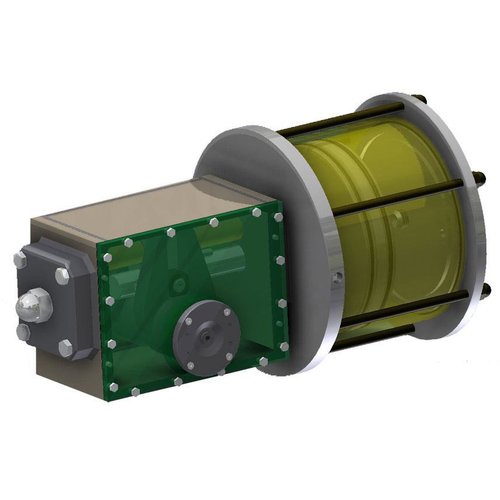
An electric actuator usually uses a motor (DC, AC, stepper, or servo) and a mechanism (lead screw, ball screw, belt, gear train) to create controlled motion. Electric actuators are common when you need clean operation, good positioning, simpler infrastructure (no compressors or hydraulic power units), and straightforward integration with control systems.
Pneumatic actuator
A pneumatic actuator uses compressed air to create motion, commonly through a piston in a cylinder or a rotary air actuator. Pneumatics are popular in factories because air systems are widespread, the actuation can be fast, and designs can be robust in harsh environments. Pneumatic actuators also dominate many valve automation setups.
Hydraulic actuator
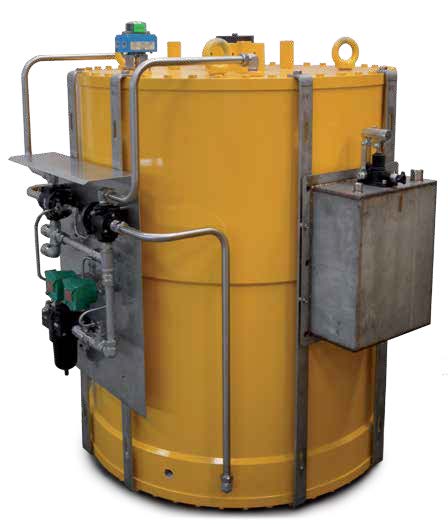
Hydraulic actuators use pressurized fluid (oil in most systems) to generate very high force. They’re common in heavy machinery, high-load applications, and environments where power density matters. Hydraulics can be precise, but the system complexity is higher than electric or pneumatic in many setups.
Mechanical actuator (brief)
“Mechanical actuator” is a broad label. Sometimes it refers to hand-operated devices (cams, levers, screw jacks). Other times it describes the mechanical conversion element inside another actuator (a screw, gear set, linkage). In practice, you’ll usually choose between electric, pneumatic, and hydraulic as your primary power source, then select the mechanical conversion that fits your motion and load.
Electric actuator — when it’s the best fit
Electric actuators make a lot of sense when you want predictable performance without maintaining a compressed air or hydraulic infrastructure at the point of use. They also shine when positioning, feedback, and repeatability matter.
Typical use cases
Electric actuators are a strong choice for:
- Positioning tasks: set a mechanism to a specific position and hold it.
- Automation with variable motion: move fast sometimes, slow other times, or use profiles.
- Clean environments: where air exhaust or oil leakage is undesirable.
- Distributed installations: where running air lines or hydraulic lines is costly.
- Systems needing easy control integration: electric signals and control loops are natural.
They’re also common in valve automation where the duty cycle is moderate and the actuator must provide controlled movement and reliable end positions.
24V, duty cycle, and environmental requirements
Electric actuator selection is often won or lost on practical details: power availability, thermal limits, and the environment the actuator lives in.
Power supply & practical selection
Many industrial electric actuators are designed around 24V DC, because it’s common in control cabinets and machine wiring. But “24V available” is not the same as “24V available at the actuator under load.” Cable length, voltage drop, peak current at startup, and the controller’s current limit can all matter.
A simple rule: if the actuator is near the edge of its force rating, expect higher current draw and more heat. If your wiring or power supply is undersized, the actuator may move slowly, stall, or trip protections. Practical selection means checking:
- Required force vs rated force (include margin)
- Speed at load (not just no-load speed)
- Peak current and continuous current
- Cable length and voltage drop
- Connector and wiring robustness
Precision and positioning control
Electric actuators range from basic “extend/retract” units to fully controlled systems with feedback and servo control. If you need positioning, ask early:
- Do you need repeatable intermediate positions, or just end stops?
- Do you need a known position after power loss?
- How tight is the accuracy requirement: millimeters, tenths, or just “close”?
Feedback options can include potentiometers, Hall sensors, encoders, or integrated position controllers. The more demanding the positioning, the more the control approach (and budget) will matter.
Pneumatic actuator — strengths, limits, and requirements
Pneumatic actuators are everywhere in industrial automation for good reasons: they can be fast, tolerant of dirt and vibration, and mechanically simple. But air is compressible, and that shapes performance—especially for positioning.
What you need in the compressed air system
Pneumatic performance depends heavily on the air system feeding the actuator. A “pneumatic actuator problem” is often a “compressed air problem.”
Key factors include:
- Supply pressure at the actuator (not just at the compressor)
- Flow capacity of valves, regulators, and tubing
- Air quality: water and contaminants damage seals and valves
- Filtration and regulation appropriate to the actuator and valve
- Exhaust handling if noise or contamination is an issue
For cylinders, the combination of bore, pressure, and friction defines usable force. For rotary actuators, pressure and geometry determine torque. If the air supply sags during peak demand, the actuator may slow down or fail to reach end position reliably.
Safety: spring-return vs stay-put
Pneumatic actuators are often chosen because they can be designed to fail to a safe state, especially in valve automation.
Do you need a spring-return actuator that closes when pressure drops?
This is one of the most important selection questions in pneumatic valve automation.
A spring-return actuator uses an internal spring to drive the actuator to a defined position when air pressure is lost. Common fail actions are “fail closed” or “fail open,” depending on process safety requirements.
A stay-put (double-acting) actuator uses air to move in both directions and may remain in its last position when pressure is lost (unless external forces move it). That can be desirable when you must avoid sudden movement, but it can be risky when the safe state requires a definite action.
Answer it by thinking through the real failure mode: what happens if pressure drops mid-cycle? In a safety-critical process, spring-return can be the difference between a controlled shutdown and an uncontrolled event.
Hydraulic actuator — high force for demanding loads
Hydraulic actuators are the go-to option when you need high force in a compact package. They can also be smooth and controllable, but the system requirements are heavier than many teams expect.
Force, stability, and typical environments
Hydraulics are common when loads are large and space is limited:
- Heavy lifting and pressing
- Large gates and structures
- Heavy-duty mobile or industrial machinery
- Applications where shock loads are expected
Hydraulic cylinders can produce very high force because hydraulic pressures are often much higher than pneumatic pressures, and fluid is effectively incompressible compared with air. That can lead to stable movement and strong holding capability—provided the valves and seals are in good condition.
Maintenance and leakage risk (practical)
Hydraulic systems demand a realistic plan for:
- Leak management (even small leaks matter over time)
- Hose and seal life
- Fluid cleanliness (contamination ruins valves, pumps, and seals)
- Temperature control (heat changes viscosity and can degrade seals)
If a small oil leak is unacceptable (clean rooms, food environments, certain plant areas), hydraulics can be a poor fit unless containment and maintenance are handled at a high standard.
Linear actuator — construction, sizing, and mounting
Linear actuators are used when you need straight-line travel with controlled stroke and force. You’ll see linear actuators as electric units (motor + screw), pneumatic cylinders, or hydraulic cylinders.
Stroke, speed, and load
Linear actuator selection is mostly about three linked values: stroke, speed, and load. You rarely get to maximize all three at once.
Load capacity vs speed (trade-offs)
In many actuator designs, higher force capability comes with reduced speed at the same power level. For electric actuators, you’ll often see this as a choice of gear ratio or screw pitch: more mechanical advantage increases force but reduces speed. For pneumatic and hydraulic cylinders, flow limits and valve sizing can make high-speed motion difficult at high load.
When comparing options, avoid the trap of comparing a no-load speed to a real load requirement. Ask: What speed do I get at my load? If the answer is missing, treat the catalog speed as best-case only.
Mounting, alignment, and avoiding binding
Mechanical alignment can make or break linear actuator performance. A common failure pattern looks like this:
- Actuator is sized correctly on paper
- The installation forces the rod or carriage to take side loads
- Friction rises, seals wear, or the screw binds
- Performance degrades or the actuator fails early
Use proper mounting methods—clevis mounts, rod ends, guided systems—so the actuator sees primarily axial loads. If the load creates moments or side forces, add guides or redesign the linkage. A linear actuator is not automatically a structural member.
Rotary actuator — when rotation is the right choice
Rotary actuators are used when the output is torque and rotation rather than linear force and stroke. Valve automation is a major driver here, but rotary motion shows up in many machines.
Torque, angle, and typical use cases
Rotary actuators are chosen based on:
- Required torque (including breakaway torque)
- Rotation angle (90°, 180°, or custom)
- Speed and cycle rate
- End-stop requirements and repeatability
Typical use cases include quarter-turn valves (ball, butterfly), dampers, indexing mechanisms, and any application where direct rotation is simpler than converting from linear motion.
Pneumatic rotary actuators (practical notes)
Pneumatic rotary actuators are common in industrial valve setups because they’re robust and can provide fast actuation. Many are rack-and-pinion or vane style. In practice, selection should include:
- Torque at available pressure (including margin)
- Duty cycle and air consumption
- Spring-return needs (fail-open/fail-closed)
- Environmental sealing and corrosion resistance
If the application involves sticky valves or process buildup, torque margin matters more than headline torque. The “it works in the shop” setup can become “it stalls in the plant” after months of operation if torque reserve is thin.
Actuator valve / actuated valve — what it is (and actuator vs valve)
The terms “actuator valve,” “actuated valve,” and “actuator vs valve” are common sources of confusion. Clearing this up helps you specify equipment correctly and avoid mismatched components.
Actuator vs valve: the difference
A valve controls flow (fluid or gas) by opening, closing, or modulating a flow path. An actuator provides the motion that moves the valve’s closure element (ball, disc, plug, gate).
So:
- The valve is the flow-control device.
- The actuator is the motion device.
- Together, they form an actuated valve (a valve assembly that can be operated automatically).
In some catalogs, “actuator valve” is informal shorthand for “a valve with an actuator installed.” In specifications, it’s better to say actuated valve or specify valve + actuator as separate line items, especially when control accessories (positioners, solenoids) are involved.
How actuated valves are used in practice
Actuated valves are used anywhere you need automatic, repeatable valve movement. Typical patterns include:
- On/off automation: open fully or close fully based on a signal.
- Sequence control: open valve A, wait, close valve B, etc.
- Safety actions: fail to a safe position on loss of power/pressure.
- Modulating control: hold an intermediate position to regulate flow (often with a positioner or electric control).
The key practical question is whether you need position control or just end positions. That choice affects actuator type, accessories, and cost.
Sizing: how to choose force, speed, and stroke
Sizing is where actuator projects go wrong most often. The good news is that most sizing mistakes are predictable: missing friction, ignoring peak loads, forgetting safety margins, or assuming the environment won’t change the load.
Force: load, friction, safety margin
Start with the real load. That might be weight, process force, spring force, or the force needed to overcome stiction. Then add what your mechanism adds:
- Friction from guides and seals
- Misalignment forces
- Efficiency losses (especially in screw mechanisms)
- Dynamic effects if you accelerate a mass quickly
Finally, add a safety margin. The right margin depends on uncertainty and the consequence of failure. For light-duty positioning in a clean environment, you might use a modest margin. For a sticky valve in a dirty process, you need more.
One practical tip: if your requirement is near the actuator’s rated limit, treat that as a warning sign. Operating near limits increases heat (electric), air consumption (pneumatic), or system stress (hydraulic), and you lose robustness over time.
Speed and cycle rate
Speed is rarely “just speed.” It’s tied to:
- How quickly you need to move under load
- How often you cycle (duty cycle)
- Whether you need smooth motion or controlled profiles
- How the system behaves at the ends of travel
For electric actuators, duty cycle is critical: fast cycles under load generate heat. For pneumatics and hydraulics, valve sizing and flow control determine speed and smoothness.
Cycle rate also changes wear. A design that survives a few cycles a day can fail quickly at thousands of cycles per hour if seals, guides, or bearings aren’t chosen for that life.
Stroke: how far it must travel
Stroke is the required travel distance for a linear actuator. It sounds straightforward, but in practice you must define:
- The actual travel needed at the load interface
- Mechanical tolerances and end clearances
- Whether you need adjustable stroke limits
- Whether the actuator must avoid hard stops
If you’re actuating a mechanism (not just moving a free load), confirm the geometry across the full range. Linkages can change required force dramatically at different positions, and that impacts both force and speed.
Common sizing mistakes
Common mistakes show up again and again:
- Using no-load speed to plan a loaded cycle time
- Forgetting breakaway force/torque
- Ignoring side loads that increase friction
- Underestimating environmental impacts (temperature, contamination, corrosion)
- Assuming “rated force” means “safe continuous force” without checking duty cycle or thermal limits
If you want a reliable system, size for the messy reality, not the lab condition.
Environmental requirements (fluid/gas/temperature)
Environment affects actuator sizing and choice:
- Temperature changes seal behavior, fluid viscosity, and motor performance.
- Contamination increases friction and wear.
- Corrosion changes hardware life and can raise required force over time.
- Fluid/gas in the process matters in valve automation: sticky media, solids, or buildup can raise torque requirements.
If you’re selecting actuators for valves handling challenging media, treat torque/force margin as insurance. A valve that becomes harder to move over time is normal in many processes.
Actuator control — control methods, feedback, and positioning
Actuator control is about how you command motion and how you know what the actuator did. The control approach can be simple (on/off) or sophisticated (closed-loop positioning).
Simple on/off vs positioning
On/off control is the simplest: the actuator moves to an end position and stops. You confirm it with limit switches or a simple sensor. This is common for:
- Open/close valves
- Simple clamps
- Basic mechanisms that don’t require intermediate positions
Positioning adds complexity because you need feedback. You’re not just energizing motion; you’re controlling it to reach and hold a position. This matters for:
- Modulating valves
- Adjustable mechanisms
- Systems where accuracy or repeatability matters
Positioning typically uses a controller plus a feedback device (encoder, potentiometer, pressure/flow feedback depending on the setup). The actuator’s mechanical design must also support stable positioning without drift, backlash issues, or compressibility effects dominating behavior.
Servo-pneumatic positioning: when it makes sense
Servo-pneumatic positioning combines pneumatics with control methods that try to overcome the limitations of air compressibility. It can be a good fit when you want pneumatic robustness but need better control than simple end stops.
Stability, accuracy, and what you must measure
With pneumatics, the actuator is driven by pressure, and pressure changes with load and air compressibility. That makes accurate positioning harder than with a purely electric solution. Servo-pneumatic systems often rely on:
- Position feedback (linear transducer or encoder)
- Pressure sensing (in some architectures)
- Fast control valves and tuned control loops
Stability is not just “it reaches the setpoint.” It’s also: does it oscillate, does it drift under load changes, and does it hold position as supply pressure fluctuates?
Typical components (kept readable)
A typical servo-pneumatic positioning setup may include:
- A pneumatic cylinder or rotary actuator
- A proportional valve or high-performance control valve for air flow
- Position feedback device
- Controller (PLC with motion capability or dedicated controller)
- Air preparation (filter/regulator; sometimes additional components to stabilize supply)
Servo-pneumatics can work very well, but it’s rarely “plug and play.” You need to treat it as a control system that must be tuned and validated under real load conditions.
Linear actuator mechanisms: ball screw and alternatives
In electric linear actuators, the screw mechanism is a major driver of performance. It affects force, speed, efficiency, backlash, and life.
Ball screw: precision and efficiency
A ball screw uses recirculating balls between the screw and nut to reduce friction. Compared to a basic lead screw, ball screws tend to offer:
- Higher efficiency (less friction)
- Better suitability for higher duty cycles
- Often better repeatability and smoother motion
They’re common in applications that need precise motion or sustained cycles under load. The trade-offs can include cost, sensitivity to contamination (depending on sealing), and sometimes noise characteristics.
When to choose something else (brief comparison)
Alternatives include lead screws, belt drives, rack-and-pinion, or guided linear modules. You might choose another mechanism when:
- You need lower cost and can tolerate more friction (lead screw)
- You want long travel at higher speed (belt-driven systems)
- You need a rugged solution with simple maintenance
- Your application is better served by pneumatic or hydraulic cylinders rather than an electric screw-driven actuator
The mechanism choice should follow the application’s real requirement: is it precision positioning, brute force, speed, or survivability?
Safety and reliability: fail-safe, environment, maintenance
Actuator systems don’t fail in a vacuum. They fail in plants, on machines, during production. Safety and reliability planning is part of sizing and selection, not an afterthought.
Fail-safe: spring-return, locking, safe position
Fail-safe design starts with one question: what should happen if power, air pressure, or hydraulic pressure is lost?
Common approaches:
- Spring-return (pneumatic) to drive to a safe state
- Mechanical locking or brakes (often in electric systems) to hold position
- Hydraulic check valves or holding valves to prevent drift
- Defined safe position with limit detection and alarms
“Safe” depends on the process. In some systems, stopping in place is safest. In others, moving to a defined open/closed state is required. Decide that first, then pick actuator and accessories that can actually deliver it.
Environment: dust, moisture, temperature, chemicals (brief)
Environmental conditions change actuator life and performance:
- Dust and particles can attack seals and screw mechanisms.
- Moisture can drive corrosion and connector failures.
- Temperature extremes affect lubricants, seals, and motor efficiency.
- Chemicals can degrade elastomers and coatings.
If the environment is harsh, selection often shifts toward simpler, more robust actuation with appropriate sealing and materials—and toward maintenance plans that are realistic for the site.
Industrial and automation applications (with selection guidance)
Actuators show up in almost every industrial sector because motion and flow control are everywhere. The useful step is connecting application demands to actuator choice.
Process automation (valves, flow, etc.)
In process systems, actuators often exist to move valves and dampers:
- On/off valves for isolation
- Modulating valves for flow or pressure control
- Dampers for air handling and process control
Selection hinges on safety action (fail-open/fail-closed), environmental requirements, and whether you need simple open/close or controlled positioning. Pneumatic actuators dominate many plants because air is available and designs are robust, but electric actuators are common where wiring is easier than air lines or where precise positioning is needed without external pneumatics.
Manufacturing/automation (linear & rotary)
In manufacturing, actuators drive motion directly:
- Clamping and gripping (often pneumatic)
- Positioning stages and adjusters (often electric)
- Indexing and rotation (rotary actuators)
- Heavy pressing or lifting (hydraulic in heavy-duty cases)
The best choice often comes down to how the line runs: cycle rate, maintenance access, cleanliness, and whether you need flexible motion profiles.
Quick examples library
A simple clamp that cycles fast all day: pneumatic often fits, assuming air quality is good.
A lift that must stop at multiple heights: electric with feedback is usually easier.
A large gate that must move a heavy load outdoors: hydraulic or heavy electric, depending on infrastructure and leak tolerance.
A quarter-turn valve with a defined fail position: pneumatic spring-return is common.
Mini checklist: electric vs pneumatic vs hydraulic
Use this as a first filter:
- Choose electric when you want clean operation, straightforward wiring, and good positioning capability.
- Choose pneumatic when you need fast actuation, robust hardware, and you already have reliable compressed air.
- Choose hydraulic when force density is critical and you can support the system complexity (fluid power, maintenance, leak management).
Then validate by sizing: force/torque, speed, stroke/angle, duty cycle, and safety action.
Final checklist before specifying or buying
If you want actuator selection to go smoothly, write down the requirements clearly before you start comparing models.
Spec checklist (force/speed/stroke/control/environment)
Motion type: linear or rotary
Output requirement: force or torque
Travel: stroke length or rotation angle
Speed: required time to move under load
Duty cycle: cycles per hour/day, continuous vs intermittent
Control: on/off vs positioning; required feedback
Power/utility: 24V DC availability, compressed air availability, hydraulic power availability
Environment: temperature, dust, moisture, corrosion, chemicals
Safety: fail-safe requirement (safe position on power/pressure loss)
Mechanical integration: mounting, alignment, side load management
If you can answer those items, you can usually narrow to the right actuator technology quickly.
When to ask for help (complex systems, safety, valves)
Get support early if:
- The application is safety-critical (fail-safe must be proven)
- Loads are uncertain, variable, or include shock loads
- You need accurate positioning with pneumatics or high-speed closed-loop control
- You’re automating valves in challenging media (buildup, solids, corrosion)
- Maintenance access is limited and downtime is expensive
In these cases, the “right” actuator is the one that keeps working after months of real operation, not the one that looks perfect in a catalog.